
300 Findings, 7 That Mattered
I spent part of this week looking at an open source project for orchestrating agents. Before I ran a line of it, I put it through the usual gates: semgrep, gitleaks, npm audit, and ruff with the bandit rules turned on. The tools handed back roughly 300 findings. A number like that used to end an evaluation, or at least stall it for a week or more while I found the time to investigate and understand each. Fortunately, this is 2026, so I ran Opus 5 through Claude Code inside the cloned repo, handed it the findings along with how I actually intended to deploy the thing, and asked which ones were real. Seven. Seven findings that require deliberate action on my part to keep from tripping over them.
The other 293 are not fabrications. Some get configured out of existence before the first run. Some are reachable only from localhost on a box that is not listening for anything else. Some are the false positives that surface in nearly every scan of a project written in that language. None of that is knowable from the finding itself. All of it is knowable from the environment I was going to run it in.
The Waiting Room Is Not a Clinical Metric
That same week, Microsoft shipped its August updates. Qualys counted 421 CVEs, 62 of them critical and 357 important, with three zero-days. One is being exploited. CVE-2026-68820 is a use-after-free in afd.sys that yields SYSTEM, and CISA added it to the KEV catalog on August 11 with a remediation deadline of August 25. SecurityWeek reported North Korean operators using it against defense and aerospace workers who took the bait on fake job offers.
The count is really interesting, because the count is not even consistent. Qualys says 421. BleepingComputer says 400. Others land at 394 or 751 depending on whether Edge, Chromium, and republished advisories are included. July was somewhere between 535 and 622 by the same disagreement. Every one of those numbers is defensible, which is a clean indication that the number is not the thing being measured.
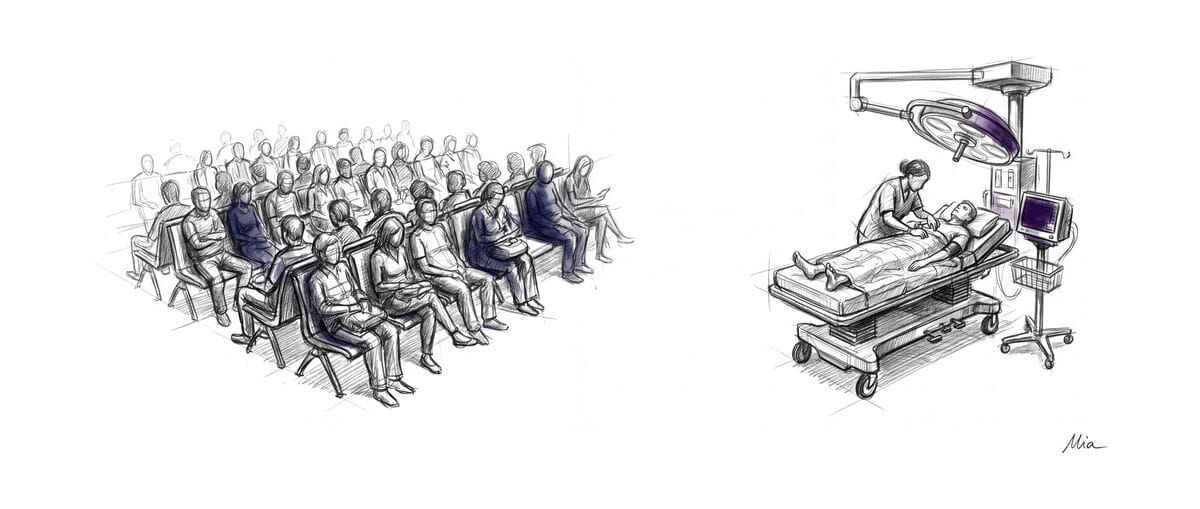
An emergency department runs triage: a fast, structured read of each arrival against the resources standing in the building that night. 421 CVEs is a full waiting room. The afd.sys bug is the gunshot wound with a federal clock on it. Most of the rest can wait for a bed. The skill in that room isn't keeping an accurate count. It's knowing which patients are bleeding, and what this particular hospital can do about it tonight. If you find yourself waiting in an ER someday, be grateful you aren't so bad off that you're being prioritized over others.
Context Is the Input, Not the Output
There is a market segment being sold against exactly this problem. Continuous threat exposure management, where AI watches your vulnerability data and continuously ranks it on your behalf. In the early 2000s I was at a hedge fund with a CMDB, Nessus, and a pile of Perl that pulled system criticality out of the CMDB to re-rank the scan output. It was not elegant. It worked, because we knew which systems made the money.
Here is the part that matters about this past week. The model did not supply the context. I did. Sitting in the cloned repo, it could trace whether a flagged path was reachable at all, which is a question the code can answer on its own. What the code could not answer is where this thing would run, what it would be permitted to reach, and how I planned to configure it. I supplied that, and that is what turned 300 into 7. Point the same model at the same repository with no idea how I intend to deploy it, and it hands back a longer, better-written list of many more than 7.
That is also why the CTEM pitch lands softer than it sounds. The hard input is an accurate map of what runs the business, and the tool does not ship with one. Buying the ranking engine before you own the map gets you a very confident ordering of things you have not verified.
421 is a headline. 62 critical is a headline. The one with a federal deadline is a work order. Sorting them takes the same thing it has always taken: knowing what I run, and knowing how I run it.
🤖 AIL LEVELS: This content's AI Influence Levels are AIL3 for the writing, and AIL4 for the images. AI Influence Level (AIL) framework